Time to Exploit is Negative: AI Broke the Patch Cycle | Dan Lorenc, Chainguard
Dan Lorenc created Sigstore at Google and now runs Chainguard, whose Athena coalition processed more than 40,000 AI-discovered security findings in a single month. He explains why the average time to exploit has gone negative, and why patching speed, not discovery, now decides who wins.
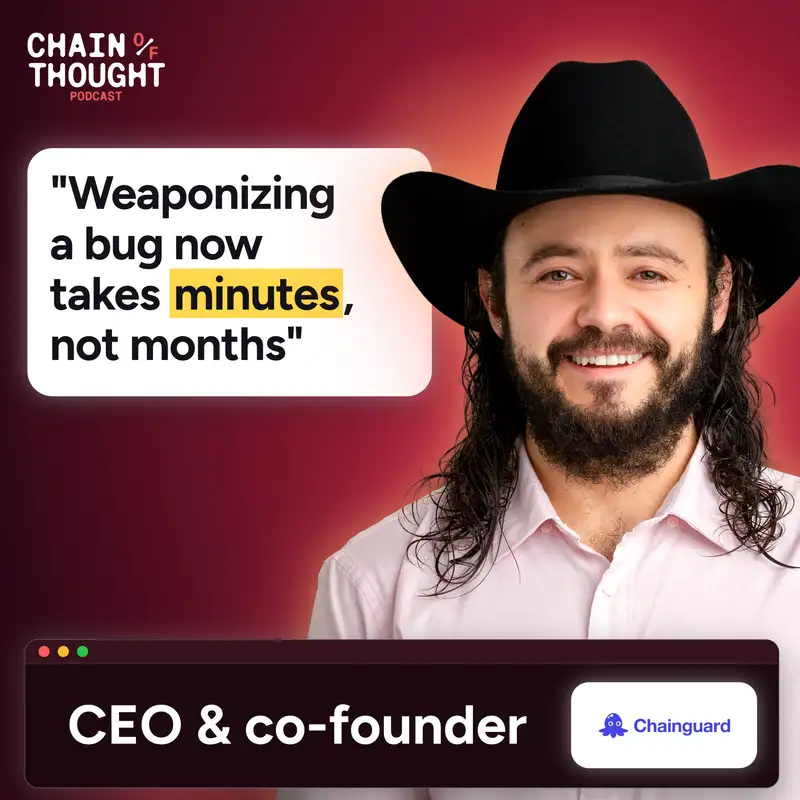
Attackers used to take months, sometimes 270 days, to weaponize a disclosed vulnerability. Now it happens in weeks, minutes if the incentive is there, and independent reports from Mandiant and CrowdStrike show the average time to exploit has gone negative.
Dan Lorenc's conclusion: finding flaws is no longer the hard part. Fixing them first is.
Dan is the co-founder and CEO of Chainguard. Before that he spent years at Google building the backbone of software supply chain security and created Sigstore. In June his team launched Athena, a coalition of more than two dozen companies including JPMorgan, Cloudflare, Cisco, and Kyndryl, built for the era where AI finds vulnerabilities faster than maintainers can patch them. Last month alone it processed more than 40,000 AI-discovered findings.
In this conversation:
- Why the average time to exploit went negative, and what collapsed the fat tail of never-exploited bugs
- How models chain "low severity" flaws into working exploits, like Project Zero's zero-click iPhone takeover
- Inside Athena: what happens between a member submitting a finding and a fix landing upstream
- Why 40,000 findings is not 40,000 CVEs: validation, dedup, and vulnerability archaeology
- Fuzzing outpaced patching for a decade, and AI is the first tool that speeds up the fixing side
- The Log4j thought exercise for solo maintainers and enterprise CISOs alike
- Fork economics, "state your intentions," and defense in depth for agent infrastructure
Chapters:
(0:00) Cold open: how time to exploit goes negative
(0:31) The 20-year assumption that just died
(3:21) What a negative time to exploit actually means
(6:04) Two new realities: attacks democratized, more bugs than anyone knew
(8:55) Chaining tiny flaws: the Project Zero iPhone story
(11:26) Why fixing AI-found vulnerabilities takes a coalition
(13:27) 40,000 findings in one month: submission to upstream fix
(18:06) The agentic pipeline: as few human eyes as possible
(19:03) Fuzzing outpaced patching for a decade
(20:50) The Log4j thought exercise for maintainers and CISOs
(23:49) When no maintainer answers: the new economics of forking
(27:40) Deleting dangerous code to slow the treadmill
(29:35) How security kills entire vulnerability classes
(31:08) Agent infrastructure: defense in depth or nothing
(34:35) Regulation: maintainer liability, frontier labs, DC's busy year
(37:01) Open model economics
(39:55) Gas Town, multiclaude, and going back to normie
(42:47) Why Dan turns the AI memory system off
(45:53) Closing: still the most fun time to build software
(0:31) The 20-year assumption that just died
(3:21) What a negative time to exploit actually means
(6:04) Two new realities: attacks democratized, more bugs than anyone knew
(8:55) Chaining tiny flaws: the Project Zero iPhone story
(11:26) Why fixing AI-found vulnerabilities takes a coalition
(13:27) 40,000 findings in one month: submission to upstream fix
(18:06) The agentic pipeline: as few human eyes as possible
(19:03) Fuzzing outpaced patching for a decade
(20:50) The Log4j thought exercise for maintainers and CISOs
(23:49) When no maintainer answers: the new economics of forking
(27:40) Deleting dangerous code to slow the treadmill
(29:35) How security kills entire vulnerability classes
(31:08) Agent infrastructure: defense in depth or nothing
(34:35) Regulation: maintainer liability, frontier labs, DC's busy year
(37:01) Open model economics
(39:55) Gas Town, multiclaude, and going back to normie
(42:47) Why Dan turns the AI memory system off
(45:53) Closing: still the most fun time to build software
Connect with Dan Lorenc:
- LinkedIn: https://www.linkedin.com/in/danlorenc/
- X: https://x.com/lorenc_dan
- Chainguard: https://www.chainguard.dev
- Athena: https://www.chainguard.dev/athena
Connect with Chain of Thought host Conor Bronsdon:
- Newsletter: https://newsletter.chainofthought.show/
- Twitter/X: https://x.com/ConorBronsdon
- LinkedIn: https://www.linkedin.com/in/conorbronsdon/
- YouTube: https://www.youtube.com/@ConorBronsdon
Thanks to Svix, presenting sponsor of season four of Chain of Thought. Svix delivers billions of reliable webhooks for startups and the Fortune 500. Get started at https://link.svix.com/cot. Qualified startups get $12,000 in credits, and YC companies get $50,000.
Thanks to Walrus, presenting sponsor of season four of Chain of Thought. Walrus Memory gives AI agents portable, verifiable memory that carries context across apps, sessions, and other agents. Get started at https://walrus.xyz/cot.
Creators and Guests


Guest
Dan Lorenc
Dan Lorenc is CEO and co-founder of Chainguard and created Sigstore at Google. On Chain of Thought he explained why patching speed now decides who wins against AI-assisted attacks.